English
 Arabic
 Esperanto
 French
 German
 Hindi
Hindi Indonesian
 Italian
 Korean
 Malay
Malay Portuguese
 Russian
 Thai
Thai Turkish
Home » News » Industry news »
Automatic French Fries Production Line
225
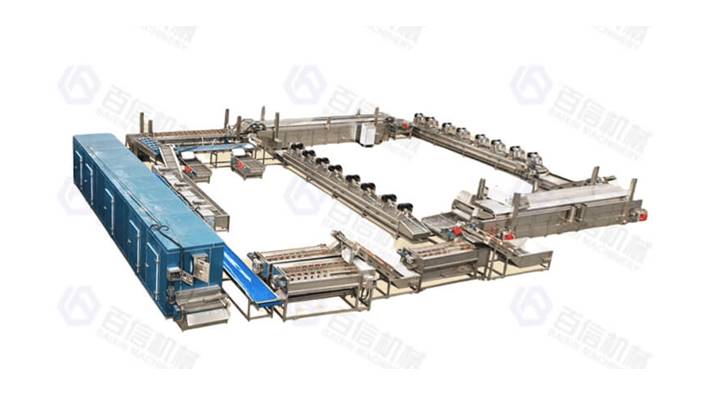
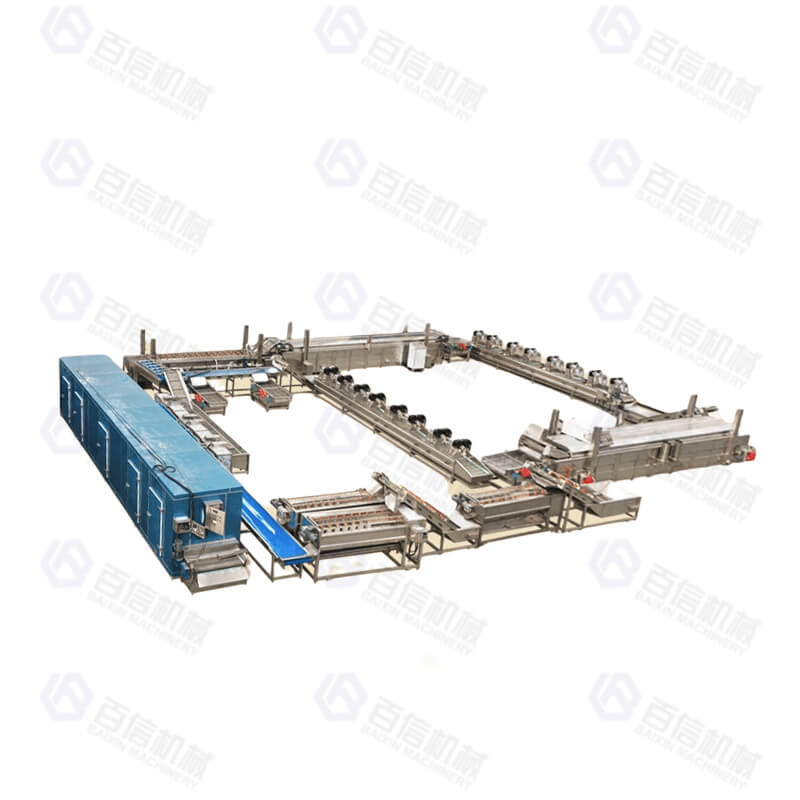
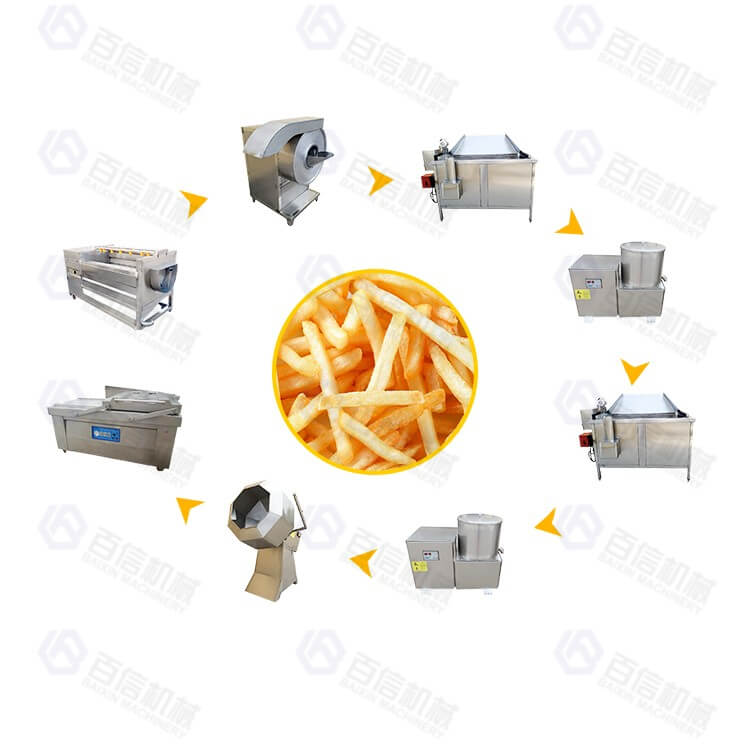
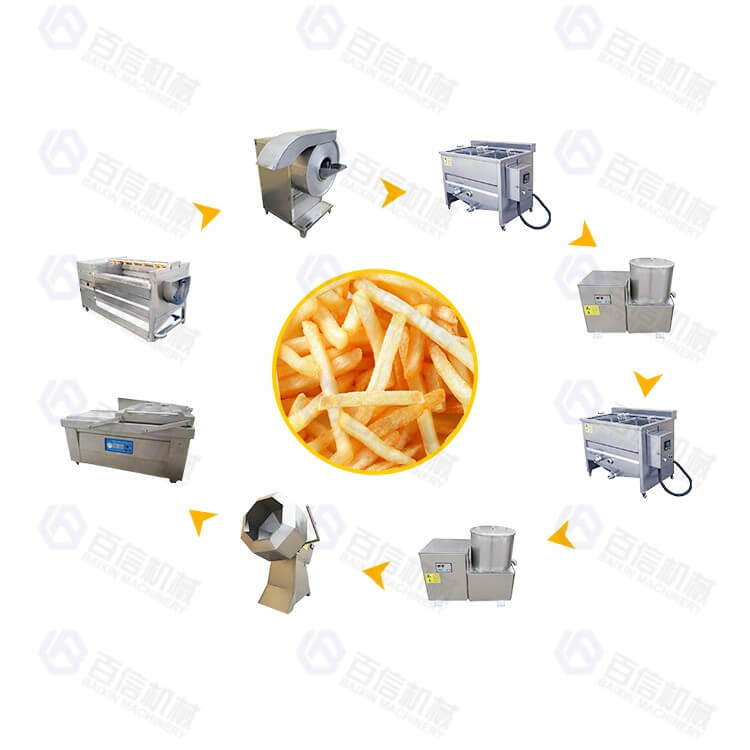
An automatic French fries production line is an industrial equipment system that continuously processes potatoes into French fries through processes such as washing, peeling, cutting, rinsing, blanching, dehydration, friesing, cooling or quick-freezing, and packaging. It can achieve high-efficiency, large-scale, and standardized production and is widely used in quick-frozen French fries processing plants .
I. Automatic French Fries Production Line Process
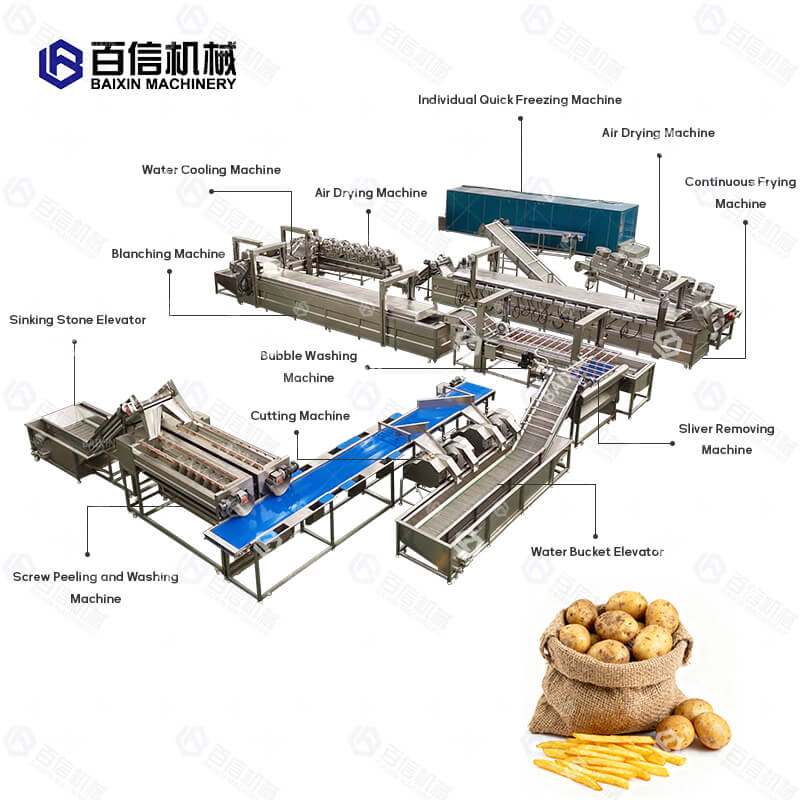
1. Sinking stone elevator
At the beginning of production, potatoes first enter a sedimentation and lifting device. This device uses water flow to tumble and separate impurities such as stones and mud mixed in with the raw materials, completing the initial cleaning. This step not only improves the cleanliness of the raw materials but also effectively prevents hard objects from causing wear or damage to subsequent equipment.
2. Washing and peeling
The pre-treated potatoes are fed into a peeling and washing machine, where the potato skins are evenly removed through the combined action of friction from the bristle rollers and rinsing with water.
3. Manual sorting
After peeling, the potatoes are conveyed to the sorting stage, where workers can remove any blackened, damaged, or substandard potatoes. This simple step is crucial to the final product quality, ensuring consistent color and processing stability of the fries from the source.
4. Cut into strips
The fries cutter quickly cuts whole potatoes into regular fries. It features a high-strength blade design, resulting in clean, uniform cuts and minimizing broken strips. By changing the blades, the fries size can be flexibly adjusted to meet the needs of different customers .
5. Pre-wash French fries
After being cut into strips, French fries have a lot of starch and debris on their surface, so they need to be rinsed first. The pre-washing system removes most of the surface impurities by rinsing with water, preventing the fries from sticking together during transport.
6. Shorten remove
uses gaps in the bristle rollers to separate out substandard fries that are too short or too thin. The purpose of this screening is to ensure the consistency of the finished product's specifications .
7. Bubble washing
In this stage, the fries are constantly tossed in the water and fully contacted with the water flow, thus thoroughly removing the surface starch. This treatment makes it easier for the fries to achieve a uniform color during friesing, while also reducing sticking and improving the texture.
8. Hot water blanching
Blanching is a crucial step in French fries processing. By controlling the temperature ( 60-95°C ) and time (60-90 seconds) , the enzymes in the fries are deactivated, preventing oxidation and discoloration. Simultaneously, it alters the internal structure, making the fries crispier.
9. Water cooling
After blanching, the fries are quickly transferred to a water-cooling system for cooling. This process prevents the fries from overcooking and stabilizes their internal structure, ensuring they maintain their shape and texture during subsequent processing.
10. Vibration dewatering equipment
Mechanical vibration quickly removes moisture from the surface of the fries, significantly reducing their moisture content and creating more stable conditions for subsequent drying and friesing.
11. Air Drying and Dehydration
After vibration dehydration, the fries enter the air drying system, where strong airflow further removes residual moisture. This step effectively reduces oil splattering during friesing, while also minimizing oil absorption and improving product quality.
12. Continuous frying
French fries are quickly fried in edible oil at a high temperature of 160-180℃ for 30-40 seconds in a continuous fryer to achieve the ideal taste and texture. The equipment is usually equipped with an oil circulation and filtration system to ensure stable oil quality, thereby guaranteeing consistent product taste.
13 . Vibration deoiling
After friesing, the fries first enter a vibrating degreasing device, where excess oil is quickly removed through vibration. This step effectively reduces the oil content, making the product healthier and improving its appearance.
14 . Air drying
In addition to vibration to remove oil, wind power is used to further remove residual oil, making the surface of the fries drier.
15 . Precooling equipment
The pre-cooling process before quick-freezing allows the fries to gradually decrease in temperature, reducing the temperature shock when they enter the freezer. This not only helps save energy but also protects the product structure, preventing surface cracking caused by rapid cooling.
16 . IQF quick-freezing machine
The quick-freezing machine uses a low-temperature, high-speed airflow to fluidize the fries and freeze them rapidly. This technology prevents the fries from sticking together while preserving their texture and shape to the greatest extent possible.
17 . Automatic weighing and packing
Frozen fries are then quantitatively packaged using an automatic weighing device and sealed.
II.Common Types of Automatic French Fries Production Line
When investing in an automatic french fries machine, it is important to consider not only the process and product standards but also factors such as plant area, energy consumption, labor requirements, and budget. Based on different production capacities, Baixin Machinery provides three solutions:
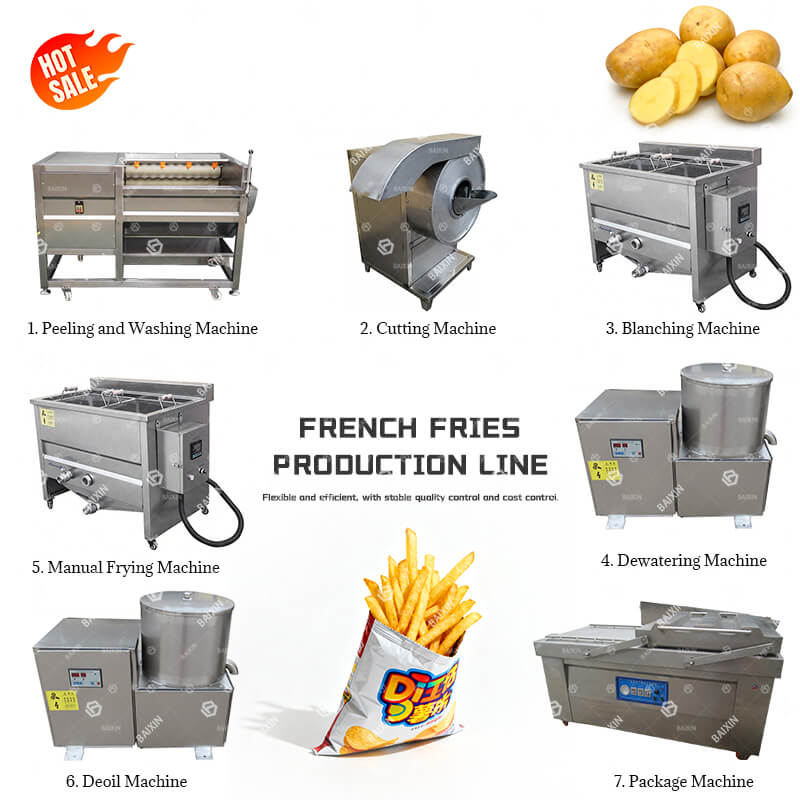
1.Small-scale Processing Capacity (50 kg/h - 100 kg/h)
Features and advantages:
Small-scale automaticFrench fries production lines require little space, have low investment, and are easy to operate, making them suitable for start-ups or small-scale investors. The equipment is quick to learn, has a short production cycle, a fast return on investment, and offers high cost-effectiveness.
Construction requirements:
The factory building requirements are not high; basic water and electricity and good ventilation are sufficient. Equipment investment is approximately US$20,000–50,000. Water consumption is 500–800L per shift, electricity consumption is 20–180kW, and 3–5 people are required to operate it.
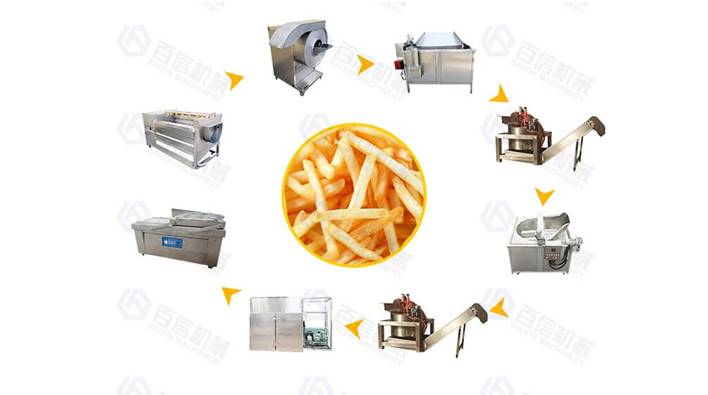
2.Medium Processing Capacity (200 kg/h - 400 kg/h)
Features and advantages:
Medium-sized automaticFrench fries production lines have a higher degree of automation, enabling continuous and stable production. They can increase production capacity while reducing labor costs, making them suitable for companies that want to expand their scale.
Construction requirements:
The site covers approximately 300 square meters and requires a stable power supply and sewage system. Equipment investment is approximately US$70,000–200,000. Water consumption is 1,000–1,500 liters per shift, and power consumption is 50–350 kW. 2–4 people are required to operate the equipment.
3.Large-scale Processing Capacity (500-1000 kg/h)
Features and advantages:
Large-scale automaticFrench fries production lines achieve full-process automation, high capacity, high efficiency, low cost, and stable product quality, making them suitable for large-scale food processing and export enterprises.
Construction requirements:
The site area is approximately 500–750 square meters, requiring a complete water, electricity, and wastewater treatment system. The investment is approximately US$280,000–450,000, with a daily water consumption of 2,500–3,500 liters and an electricity consumption of 200–1,000 kW. It requires 4–6 people to operate.
III.Advantages of automatic french fries production lines
1. High-efficiency production
automaticequipment can operate continuously, greatly increasing production capacity. A single production line can process hundreds of kilograms to several tons of potatoes per hour, far exceeding the efficiency of manual labor.
2. Stable finished product quality
By precisely controlling the cutting size , oil temperature, and time, we ensure that every fries is consistent in appearance, taste, and color.
3. Reduce labor costs
automaticsystems reduce reliance on manual operation, requiring only a small number of personnel for monitoring and maintenance, thus significantly reducing labor costs.
4. Food safety
The entire production line is made of food-grade stainless steel, and its enclosed design reduces the risk of contamination and better meets modern food safety standards.
Investing in a fully automatic French fries production line is a key decision for achieving standardized production and increasing profit margins. Choosing the right manufacturer is paramount. As an experienced French fries production line manufacturer, Baixin Machinery offers diverse production line configurations ranging from 50 to 5000 kg/h . We not only provide you with high-performance French fries production machines, but also offer free professional layout solutions tailored to your factory size and comprehensive technical support.

Previous post:
Next post: